The strongest one. For the most severe cases.

SADI-S
in Mexico (Cancún).

SADI-S is a gastric sleeve plus a single-anastomosis duodeno-ileal bypass — the strongest metabolic procedure in bariatric surgery. It’s meant for BMI of 50 and up, severe type 2 diabetes, or as a second stage after a sleeve that fell short. The ASMBS backs it — and it demands lifelong supplementation.

Lifelong commitment: SADI-S requires permanent nutritional supplementation (vitamins A, D, E, K, B12, iron, calcium, copper, zinc) and laboratory monitoring every 6–12 months. Endorsed by ASMBS as an accepted bariatric procedure (ASMBS Position Statement on SADI-S, 2020).
2,000+ Procedures
CE 14247260 UNAM cédula
24/7 Surgeon's WhatsApp
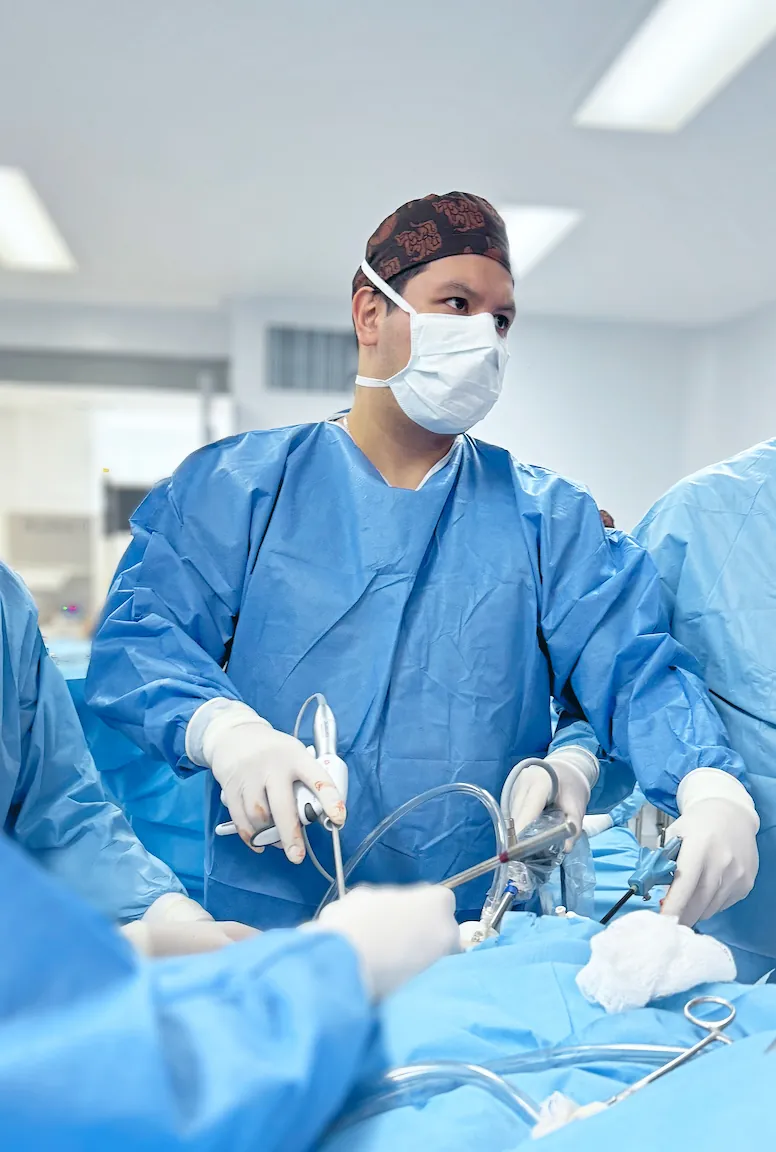
Dr. David Lomelí en quirófano
In the OR · Hospital Joya, Cancún

01 · What it is

Sleeve, bypass and chemistry, in one operation. Three mechanisms, one connection.

Diagrama del SADI-S: manga gástrica con anastomosis duodeno-ileal
~80% of stomach resected

SADI-S (Single Anastomosis Duodeno-Ileal Bypass with Sleeve) consists of a vertical sleeve gastrectomy — laparoscopic resection of approximately 75–80% of the stomach — plus a single anastomosis between the duodenum (just past the pylorus) and a loop of ileum.

It is a simplification of the classic biliopancreatic diversion with duodenal switch (BPD-DS): a single surgical join instead of two. The pylorus is preserved, which reduces the risk of dumping syndrome compared to classic bypass.

It combines three mechanisms: restriction (sleeve), intestinal malabsorption (duodeno-ileal bypass), and hormonal effect on satiety and glucose. That's why it is the most metabolically potent bariatric procedure available — and why it requires lifelong nutritional supplementation (ASMBS Position Statement 2020).

02 · Who it's for

For severe cases. And for patients who accept the lifelong protocol.

SADIs isn’t my first-line option for standard cases. I reserve it for very high BMI, severe type 2 diabetes, or as a second stage when a prior sleeve fell short. Every case gets evaluated one by one — I see patients from all over Mexico and abroad, and your first assessment can happen online.

≥50

BMI ≥50 (super obesity)

Cases where weight loss needs to be more aggressive than what sleeve or classic bypass can offer. ASMBS endorses SADI-S for this profile (Position Statement 2020).

T2D

Severe type 2 diabetes

Diabetes especially with poor control. SADIs shows high metabolic remission rates in available literature (ASMBS Position Statement 2020).

Second stage after sleeve

Patients with insufficient response to a primary sleeve gastrectomy, where additional weight loss or stronger metabolic effect is needed.

Contraindications to discuss: small-bowel inflammatory bowel disease, history of severe nutritional deficiencies, plans of pregnancy in the next 18–24 months, or unwillingness to commit to lifelong follow-up with supplementation.

03 · The procedure

From first consult to discharge. What happens, step by step.

~120–180 minutes in the OR · 2–3 nights in hospital
01

Pre-operative evaluation

Cardiology and anesthesia evaluation, nutritional assessment with a clinical nutritionist, psychological evaluation with bariatric psychology, and specific informed consent documenting the lifelong nutritional supplementation requirement.

02

Surgery day

Laparoscopic operation under general anesthesia. Resection of 75–80% of the stomach in vertical sleeve, followed by creation of a single anastomosis between the duodenum and a loop of ileum. Approximate operative time: 120–180 minutes.

03

Hospital recovery

2–3 nights in hospital. Early ambulation within 24 hours. Start of clear-liquid diet under supervision. Daily medical visit until discharge.

04

Post-surgical stay

If you're from outside Cancún, 3 additional days are recommended before flying home. Hotel near the hospital, WhatsApp follow-up and fluid monitoring.

05

Dietary protocol and supplementation

Typical progression: clear liquids → full liquids → puree → soft solids over approximately 6 weeks. Immediate start of nutritional supplementation (vitamins A, D, E, K, B12, iron, calcium, copper, zinc) — for life.

06

Lifelong follow-up

In-person or virtual visits at month 1, 3, 6, and 12. Laboratory monitoring every 6–12 months to watch for nutritional deficiencies (more frequent than with RYGB or sleeve). Follow-up is lifelong — not optional.

04 · Outcomes

The one that drops the most weight. The one that asks the most.

SADIs shows the strongest weight-loss and metabolic-remission results among available bariatric procedures, especially in super obesity. But the real outcome depends on adherence to supplementation and follow-up.

80–90%

Excess weight loss at 2–3 years

Range reported in available literature (Spinos et al., systematic review and meta-analysis, Obesity Surgery 2022; ASMBS Position Statement on SADI-S 2020). Superior to RYGB and sleeve in total loss, especially in super obesity.

60–90%

Type 2 diabetes remission

Rate reported in available literature (ASMBS Position Statement on SADI-S 2020). Among the highest across bariatric procedures for severe metabolic cases.

Lifelong supplementation

Vitamins A, D, E, K, B12, iron, calcium, copper, and zinc — permanent, with laboratory monitoring every 6–12 months. Deficiencies are more common than with RYGB or sleeve.

Sources: ASMBS Position Statement on Single-Anastomosis Duodeno-Ileal Bypass with Sleeve Gastrectomy (SADI-S), Surgery for Obesity and Related Diseases, 2020; Spinos et al., systematic review and meta-analysis, Obesity Surgery 2022.

05 · Cost

I don't publish prices. Here's why.

Each case has a different risk profile, hospital choice, length of stay, and follow-up program. Publishing a single number would be dishonest — it would either undersell complex cases or overprice simple ones.

WhatsApp me your weight, height, and any medical conditions. I respond within 24 hours with a real quote, hospital recommendation, and financing options if you need them.

Get a quote on WhatsApp →

06 · SADIs vs Bypass

SADIs or bypass? Depends on how severe and how disciplined.

Want the full picture across all four surgeries (sleeve, bypass, mini bypass, and SADI-S)? It’s in the blog’s comparison guide. Here, the head-to-head:

SADIs · This page

When SADIs wins

  • BMI ≥50 (super obesity), where weight loss needs to be more aggressive.
  • Severe type 2 diabetes with poor control on prior RYGB or insufficient response.
  • Second stage after sleeve gastrectomy with insufficient response.
  • You accept lifelong nutritional follow-up (supplementation A, D, E, K, B12, iron, calcium).
Gastric Bypass

When bypass wins

  • BMI under 50 — RYGB is usually sufficient for the desired outcome.
  • You don't want SADIs' more intensive supplementation regimen.
  • Stronger 10+ year evidence — RYGB is the most studied bariatric procedure.
  • History of nutritional deficiencies or elevated risk of non-adherence to follow-up.

Ask me about Gastric Bypass on WhatsApp →

07 · Frequently asked

Your questions deserve honest answers.

SADI-S stands for Single Anastomosis Duodeno-Ileal Bypass with Sleeve: a gastric sleeve plus a duodeno-ileal bypass built with one connection. I remove 75–80% of the stomach laparoscopically and connect the duodenum directly to a loop of ileum, keeping the pylorus in place. It’s the strongest metabolic procedure in bariatric surgery, endorsed by the ASMBS (Position Statement, 2020).
SADIs combines a sleeve gastrectomy with a single-anastomosis duodeno-ileal bypass. It has stronger restrictive, malabsorptive, and hormonal effects than RYGB or sleeve alone — that's why it is indicated for super obesity (BMI ≥50) and severe type 2 diabetes. ASMBS recognizes it as an accepted procedure (ASMBS Position Statement on SADI-S, 2020).
~80–90% of excess weight at 2–3 years in published studies (Spinos et al., systematic review and meta-analysis, Obesity Surgery 2022; ASMBS Position Statement 2020). Results are superior to RYGB and sleeve in total loss, especially in super obesity. Your outcome depends on adherence and your specific case.
Yes. SADIs requires lifelong nutritional supplementation (vitamins A, D, E, K, B12, iron, calcium, copper, zinc) and laboratory monitoring every 6–12 months. It is a real commitment — we discuss it in detail in consultation before deciding. If you are not willing to commit to follow-up, an option with a less intensive regimen (RYGB or sleeve) may be more appropriate.
Varies by hospital (Joya, Amerimed, or Galenia), length of stay, and follow-up program. I don't publish a single number because it would be dishonest — it would either undersell complex cases or overprice simple ones. WhatsApp me for a real quote within 24 hours, along with financing options if you need them.
2–3 nights in hospital. Ambulation within 24 hours. Liquid → soft → solid diet over approximately 6 weeks. Return to office work typically in 2–3 weeks. WhatsApp open from the moment you wake up in recovery.

Next step

SADIs is a lifelong commitment. You accept it, I operate. If not, I tell you.

WhatsApp me your weight, height, and any medical conditions. I respond personally with an honest assessment of whether SADIs is the best option for your case — or whether an alternative with less follow-up burden (RYGB or sleeve) would be more appropriate.

Reply within 1 hour · 24/7
WhatsApp Dr. Lomelí — 24/7